
Yellow LineStations list, map and timings
The Yellow Line runs 18.82 km from RV Road to Bommasandra with 16 elevated stations, linking South Bengaluru, Silk Board and Electronic City. It meets the Green Line at RV Road and the Pink Line at Jayadeva Hospital; the Blue Line will join it at Central Silk Board.
- Route
- RV Road – Bommasandra
- Stations
- 16
- First train (weekdays)
- 6:00 AM
- Last train
- 11:55 PM
- Trains every
- 5.5 min at peak
- Interchanges
- RV Road, Silk Board, Jayadeva
All 16 Yellow Line stations, in order
From RV Road – Bommasandra. Tap a station for its timings, exits and nearby places.
Yellow Line map
Every Yellow Line station on the city map, with interchanges marked and the other lines shown faded. Full Bangalore metro map
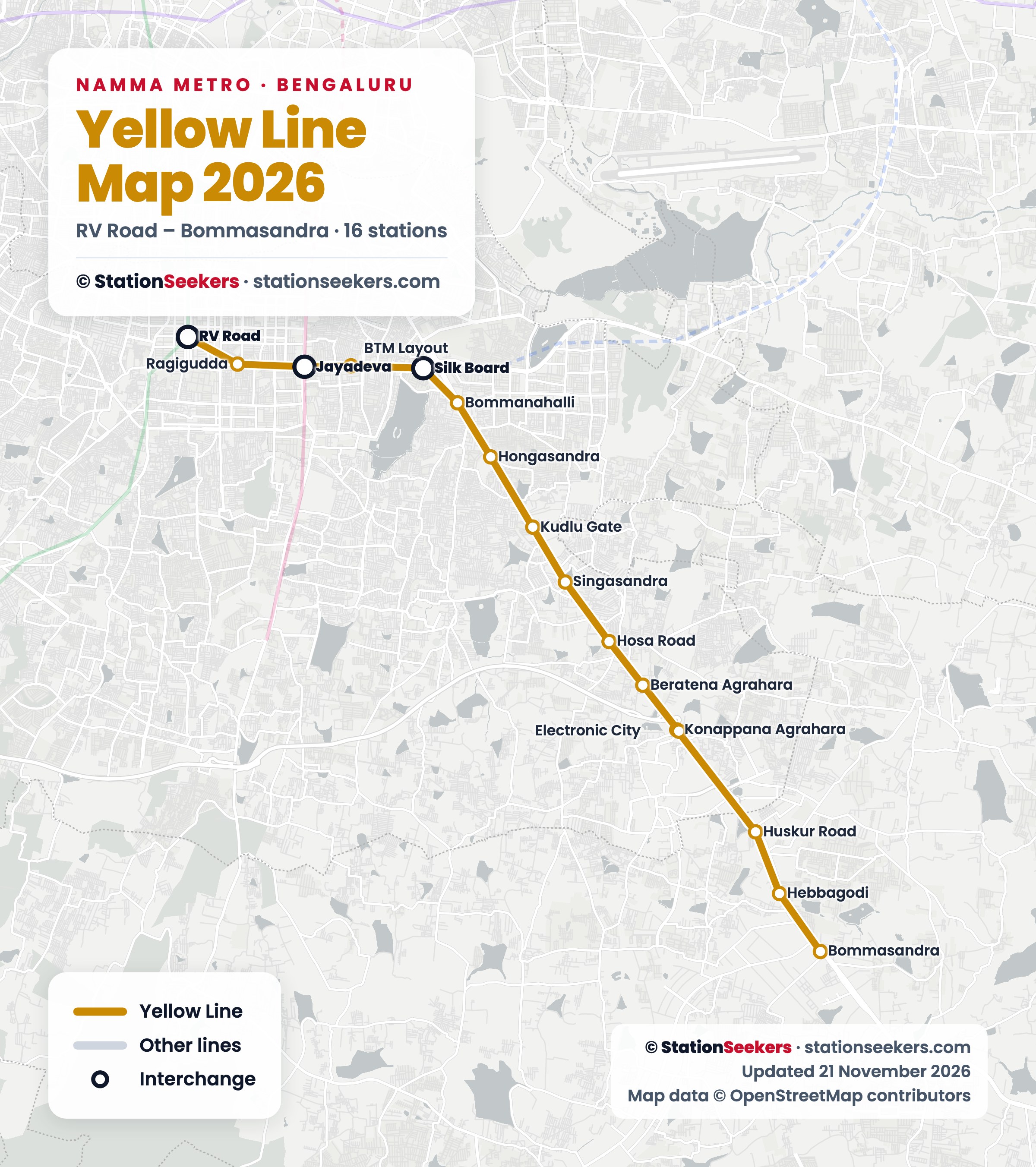
Tap the map to open it full size. Map data © OpenStreetMap contributors.
Yellow Line timings
First and last train from each end of the line. Trains run every 5.5 minutes at weekday peak hours and every 10 minutes or so on Sundays.
| Day | From RV Road | From Bommasandra |
|---|---|---|
| Monday | 5:05 AMlast 11:55 PM | 5:05 AMlast 10:42 PM |
| Tuesday to Friday | 6:00 AMlast 11:55 PM | 6:00 AMlast 10:42 PM |
| Saturday | 6:00 AMlast 11:55 PM | 6:00 AMlast 10:42 PM |
| Sunday | 7:00 AMlast 11:55 PM | 7:00 AMlast 10:42 PM |
From BMRCL's timetable. Mondays start early; Sundays start at 7:00 AM. For your station's own first and last train, open it from the list above or see Namma Metro timings for every station.
Major Interchange Hubs
Strategic network junctions connecting multiple transit corridors.
About the Yellow Line
The Namma Metro Yellow Line is one of the most anticipated corridors in Bengaluru’s expanding metro network. Stretching from RV Road to Bommasandra, this line plays a crucial role in connecting South Bengaluru’s major IT hubs, residential zones, and industrial areas.
Spanning approximately 19 kilometers with 16 stations, the Yellow Line is designed to significantly reduce travel time for commuters traveling to Electronic City, BTM Layout, and surrounding regions. It is expected to ease traffic congestion on Hosur Road, one of the busiest corridors in the city.
Current Status & Progress
The Yellow Line is nearing completion, with trial runs and final system integrations underway. Once fully operational, it will introduce driverless train technology, making it one of the most advanced metro lines in India.
Connectivity & Interchange
The Yellow Line offers strong network integration through key interchange stations:
- Rashtreeya Vidyalaya Road → Interchange with Green Line
- Jayadeva Hospital → Future interchange with Pink Line
- Central Silk Board → Future interchange with Blue Line
This makes the corridor a critical connector between South Bengaluru and upcoming metro expansions.
Key Areas Covered
The line connects several high-demand locations including:
- RV Road
- BTM Layout
- Jayadeva Hospital
- Silk Board
- Electronic City
- Bommasandra
Local Connectivity
With the Yellow Line, commuters can easily access:
- IT hubs in Electronic City
- Educational institutions
- Residential layouts in South Bengaluru
- Industrial zones in Anekal region
The line is supported by BMTC bus routes and upcoming infrastructure improvements.
Train Technology & Facilities
The Yellow Line introduces modern metro features including:
- Driverless train operations (UTO technology)
- CCTV surveillance systems
- Digital passenger information displays
- Automatic fare collection system
- Advanced signaling and safety systems
Timings & Frequency (Expected)
- Operating Hours: ~5:00 AM to 11:00 PM
- Peak Frequency: 4–6 minutes
- Off-Peak Frequency: up to 10–15 minutes
Metro Fare
Metro fares are expected to start from ₹10 and vary based on distance. Smart cards offer discounted fares and faster entry/exit.
Nearby Attractions
Popular places near Yellow Line stations include:
- Lalbagh Botanical Garden (near RV Road)
- Bull Temple
- BTM Lake
- Electronic City commercial zones
Future Impact
Once operational, the Yellow Line will:
- drastically reduce commute time to Electronic City
- improve last-mile connectivity
- support Bengaluru’s growing workforce
- integrate seamlessly with upcoming metro corridors